Sumber Foto: Warta Ekonomi
Internasional
Kerangka Perdagangan Timbal Balik Tingkatkan Daya Saing MSME Indonesia
Warta Ekonomi, Jakarta -
In a rapidly fragmenting global economy, Indonesia must not merely react to geopolitical shifts — we must shape them. The reciprocal trade framework between Indonesia and the United States, if implemented with strategic clarity, is not just a trade agreement. It is a structural opportunity to elevate Indonesia’s economic sovereignty, strengthen our MSMEs, and solidify our position as a pivotal middle power in the global landscape.
For Indonesia, the core question is not whether engagement benefits us. The real question is how we leverage it to accelerate national transformation.
Strengthening Indonesia’s Export Competitiveness
One of the most tangible advantages for Indonesia lies in improved market access to the United States — the world’s largest consumer market. Reduced and structured tariff mechanisms on Indonesian goods create a more predictable export environment, particularly for labor-intensive sectors such as textiles, manufacturing, and agro-processing.
This is highly significant for our domestic value chains. When export certainty increases, domestic production scales. When production scales, MSMEs — as suppliers, subcontractors, and service providers — naturally expand.
In this sense, export facilitation is not only about large corporations. It is about the thousands of Indonesian MSMEs embedded within supply chains.
MSMEs: The Silent Winners of Trade Integration
Indonesia’s MSMEs contribute more than 60% of GDP and absorb the majority of national employment. Yet historically, they have been excluded from global trade due to:
Complex standards
certification barriers
logistics inefficiencies
digital trade limitations
This framework directly addresses those constraints through:
digitalized customs and paperless trade
streamlined regulatory procedures
acceptance of international standards
reduced technical and conformity barriers
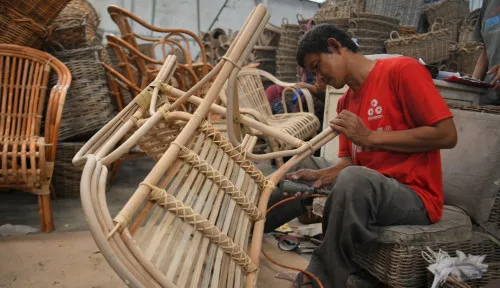
These reforms lower entry barriers for Indonesian MSMEs to access international markets. A small batik exporter in Solo, a halal food producer in West Java, or a creative economy startup in Bali can now integrate more easily into global digital and physical trade ecosystems.